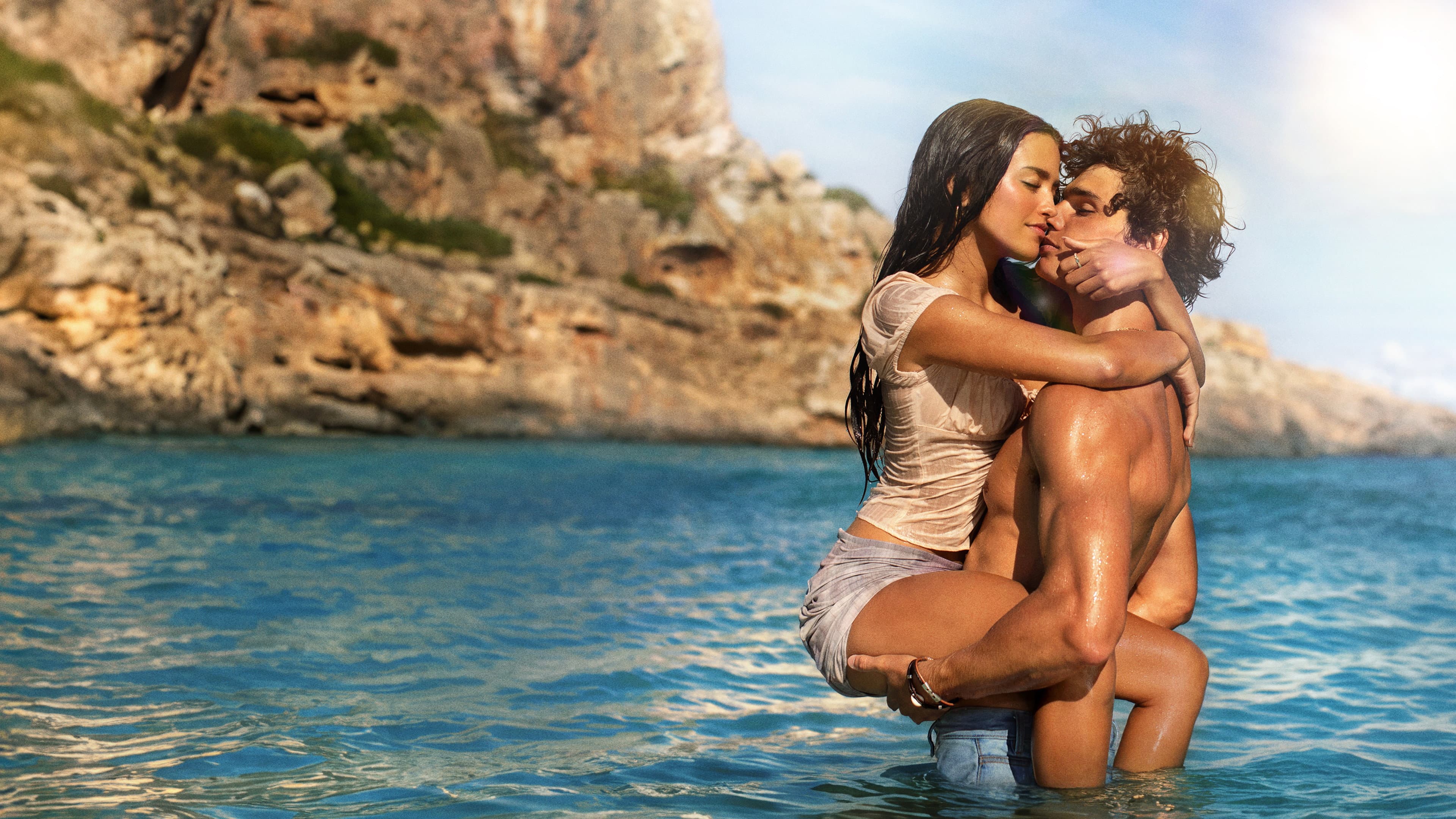
The sun-drenched cliffs of Mallorca have rarely looked this bittersweet. Yesterday, August 26, marked the theatrical release of The Last Sunrise, a romance-drama that trades the usual meet-cute frivolity for something far more fragile and achingly human. Directed by Carlson Young, the film is a quiet gut-punch of a summer story, and it arrives with a clear mandate: to make you feel every single second of a fleeting season.
At the center of the storm is Maia Reficco, delivering a breakout performance as Oriah “Ry” Pera, a college student grappling with a chronic, worsening illness. Escaping the sterile confines of hospital corridors and well-meaning but suffocating family concern, Ry lands in Mallorca for the summer with her mother, Isolde - played with a layered, tightly-wound intensity by Eva Longoria. What begins as a last-ditch escape quickly becomes something else entirely when Ry crosses paths with Julián Garcia (a magnetic Fernando Lindez), a local whose easy-going warmth stands in stark opposition to the ticking clock in Ry’s own body.
The film’s premise might suggest a familiar template - sick girl finds love, learns to live in the moment. But Young, known for her sharp visual flair and emotional precision, refuses to let the narrative settle into comfortable clichés. The Last Sunrise is less an exercise in tearjerking than it is a meditation on the cost of presence. The script invites you into the unspoken tension between Ry’s desire to embrace the now and her body’s relentless reminder that the now is borrowed time.
Reficco carries that duality with remarkable grace. She gives Ry a bristling intelligence - a woman who is deeply aware of her own fragility but refuses to be defined by it. Her early scenes with Longoria are taut with unspoken grief; the two women orbit each other like planets caught in an unbreakable, painful gravity. Longoria, meanwhile, finds the cracks in Isolde’s polished façade. There is a weariness here, a mother holding her breath, and the actress conveys a lifetime of suppressed fear in a single glance.
It would be easy to coast on the chemistry between Reficco and Lindez, and yes, there is an unforced, sun-kissed charm to their courtship. Julián is no manic pixie dream boy; he’s a grounded presence who asks Ry to stop running from her life long enough to actually live it. Their scenes together - a midnight swim, a shared plate of calamari at a cliffside bar, a slow dance in the dying light - feel earned, not manufactured. Lindez brings a stillness to the role that perfectly counterbalances Reficco’s internal storm.
But The Last Sunrise has a quieter, more deliberately paced second act, and it’s here that Young’s confidence as a storyteller shines. The idyll cannot last. As Ry’s condition deteriorates, the film pulls the camera closer, closing in on the small, devastating details: the tremor in a hand, the labored breath before a laugh. And just when the emotional weight feels nearly unbearable, the narrative pivots to a seamier undercurrent - the long-hidden family secrets that Isolde has buried deeper than any Mediterranean current.
When those secrets surface, they don’t arrive as a cheap twist, but as a slow, agonizing unraveling. The supporting cast - Chloé Sweetlove as Amara, Andrés Velencoso as Mateo Garcia, Sabrina Bartlett as Prisha - all contribute to a rich, interconnected world where every character is carrying their own invisible burden. Molly B. Thomas and Razan Nassar round out the ensemble with performances that ground the story in a lived-in reality, preventing the melodrama from ever tipping into soap opera territory.
Young’s direction is defined by restraint. She lets Mallorca breathe, using the golden-hour landscape not as a postcard but as a character in its own right - a constant reminder of beauty that doesn’t care about your timeline. The final act, which I won’t spoil, stays true to the film’s title, building to a sequence that is less about spectacle than about quiet, devastating acceptance. It’s a choice that demands patience, but by then, you’re fully invested in every scarred, hopeful heartbeat.
The Last Sunrise isn’t a film that will chase you with big dramatic declarations. It’s a film that waits for you to catch up, to sit in the silence, to notice the way a character’s smile doesn’t quite reach their eyes. It’s a mature, deeply felt portrait of love under a deadline, anchored by two powerful performances and a director with a clear vision. For those willing to surrender to its rhythm, it’s a summer you won’t easily forget.