The story has been told before, but never quite like this. On November 6, Peter Farrelly's I Play Rocky arrived in theaters, and audiences are discovering that the making of a Hollywood legend is every bit as dramatic as the legend itself. The film, which chronicles Sylvester Stallone's against-all-odds crusade to star in the movie he wrote, has struck a chord with viewers and critics alike, earning an 8.9/10 rating on TMDb and generating the kind of word-of-mouth that awards-season hopefuls dream about.
At its core, I Play Rocky is a story about conviction. The year is 1975, and Stallone is a struggling actor with a singular obsession: he has written a screenplay about a down-and-out Philadelphia boxer, and he believes - with a certainty that borders on the irrational - that he is the only man who can play him. Hollywood disagrees. Studios want the script, but they want a name for the lead. Burt Reynolds. Robert Redford. Anyone but the unknown kid with the drooping eye and the desperate hunger. Stallone refuses. He bets everything on himself, holding the line against seemingly impossible odds.
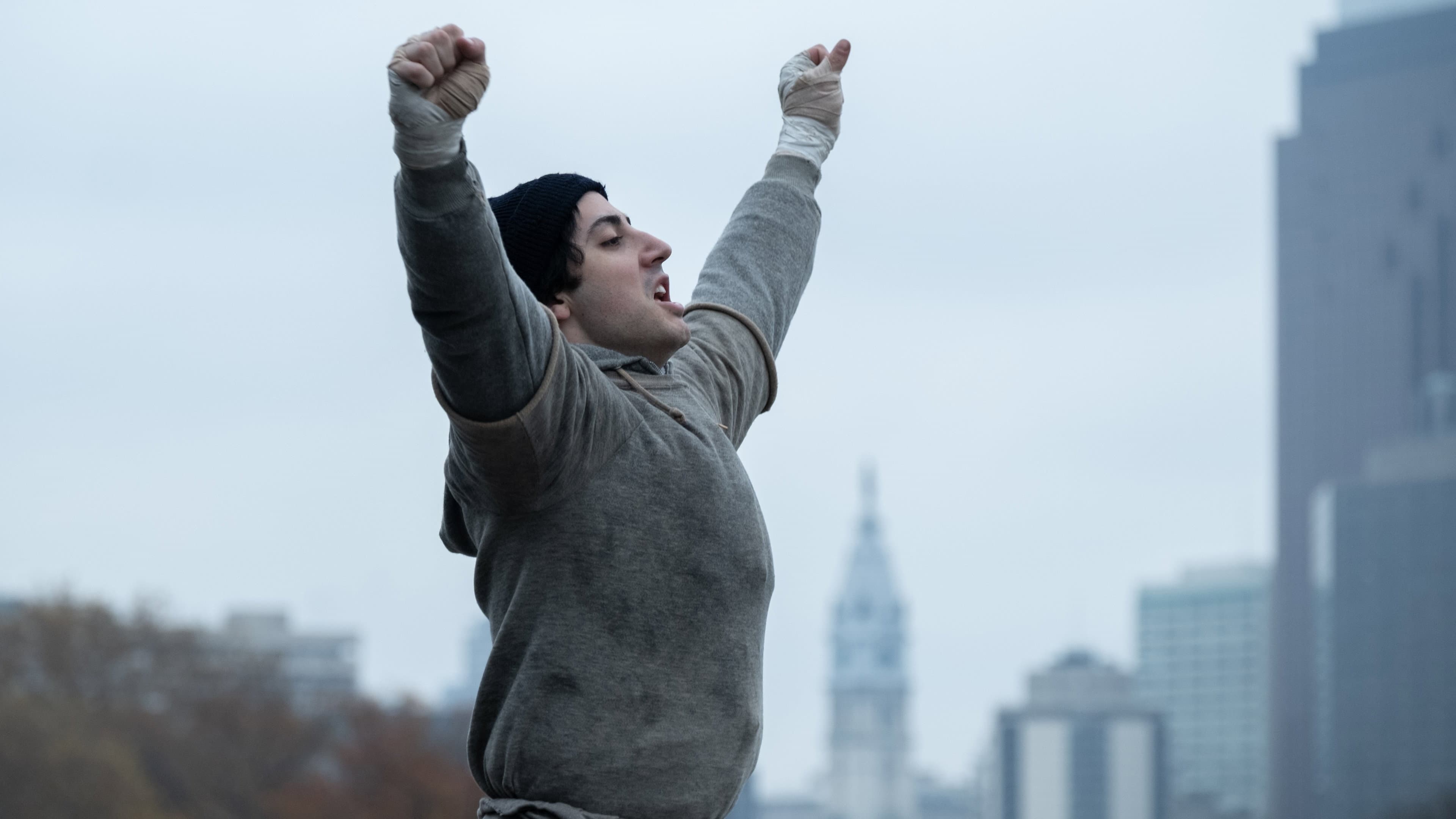
Anthony Ippolito steps into the role of Stallone, and by all accounts, the transformation is remarkable. Rather than impersonation, Ippolito offers interpretation - capturing the grit, the vulnerability, and the almost reckless self-belief that would come to define Stallone's career. It's a performance that anchors the film, grounding its larger-than-life narrative in something deeply human.
Farrelly, best known for broad comedies like Dumb and Dumber and the Oscar-winning Green Book, proves an unexpectedly apt choice for the material. The film's drama is leavened with moments of humor and warmth, and Farrelly's instinct for underdog storytelling serves the material well. He understands that the stakes here aren't just financial - they're existential.
The supporting cast is uniformly strong. AnnaSophia Robb brings depth and nuance to Sasha Czack, Stallone's first wife, whose faith in him is both a lifeline and a source of tension. P.J. Byrne and Toby Kebbell are excellent as producers Irwin Winkler and Robert Chartoff, the men who ultimately took the gamble. Jay Duplass captures the quiet intensity of director John Avildsen, while Tracy Letts brings gravitas to the role of agent Sandy Maddox. Matt Dillon, as Stallone's father Frank Stallone Sr., delivers a performance of considerable emotional weight, and Stephan James makes the most of his scenes as Carl Weathers, the man who would eventually become Apollo Creed.
But the film belongs to Ippolito. His Stallone is not a caricature - there's no mumbling parody here, no wink at the audience. Instead, we see a young man of limited options and unlimited determination, a man who knows that this is his one shot and refuses to let it slip away. The film's most powerful sequences are its quietest: Stallone at his typewriter, Stallone staring down rejection, Stallone refusing, again and again, to compromise.
I Play Rocky arrives at a moment when Hollywood is particularly fond of stories about itself. But this isn't a cynical backstage drama or a nostalgic valentine to the industry. It's a story about the cost of belief - what it takes to hold firm when everyone around you says you're wrong. The film runs 128 minutes, and it moves with the propulsive energy of its subject's ambition.
The picture is also a reminder of what Stallone himself accomplished. Rocky went on to win the Academy Award for Best Picture, a feat that still ranks among the most improbable in Hollywood history. But I Play Rocky wisely stops before that victory. Its focus is on the struggle, not the triumph - on the years of rejection, the near-misses, the moments when giving up would have been the sensible choice.
In a season crowded with prestige pictures and franchise extensions, I Play Rocky stands out for its sincerity. This is a story about an actor who wrote his own way into history and refused to let anyone else take his place. It is, in the truest sense, a love letter to the stubborn dreamers who make this town what it is. And with Ippolito's star-making turn at its center, it's a film that deserves the attention it's receiving.